Ecological Autobiography (11/1/12)
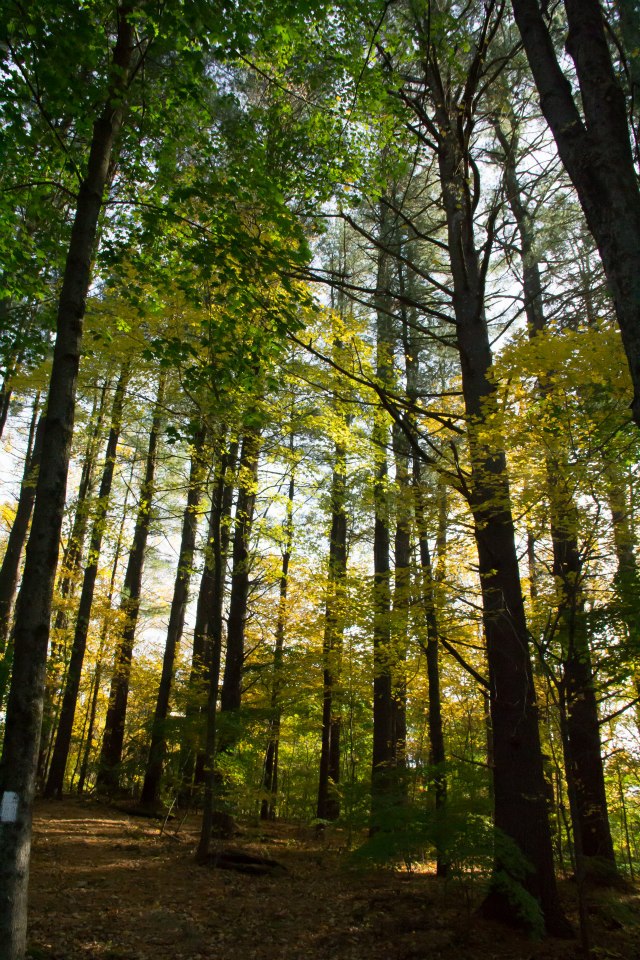
I remember more and more of my childhood in a slight haze, a feeling that maybe my memories are invented or maybe just not my own. But across the ice frosted river and up the winding trail through beech trees that have forgotten to shed their rattling brown leaves and into the gully where the vernal pool floods, I remember the hiding places of the red spotted newts and the nests of the Coopers Hawk and the Tulip trees twisting for the sun.
The man, whose job 15 years later I have taken over, cupped his ear and told us with a finger to his lips to listen for the trickling of the stream. When we could hear the water, he would say, we must start climbing through the brush and rocks and when we could smell the wet moss we must angle towards the setting sun and scramble towards the towering tulips and aging hemlocks that hung over the ice.
I remember this place more clearly than my own bedroom. I remember the shifting seasons; the surge of snowmelt flooding the edges and submerging the logs and the spring rains covering the last of the stepping stones that we had so carefully placed for our own hopping. I remember the fresh growth and the swarms of mating toads and salamanders and peepers. I remember the heat of the summer sun baking the pools of water with but small puddles clinging to its deepest places and the stream zigzagging between the logs and stepping stones. I remember the late summer rains refilling the pool just before the leaves began to tint, began to redden and yellow. The deer and the bear would come to drink, the squirrels digging and foraging just before the snows took the last of the leaves and frosted the pool.
For years I returned here, sometimes daily, sometimes monthly and watched the place change and learned its rhythms. As I grew older I would climb the scree fields on the far side of the gully and found the secret spots and the animal dens hidden under the rocks. I found the bones of what I thought were the Schaghticoke, the tribe whose name is taught in the schools and in the hills of western Connecticut. I learned to climb beyond the gully as I grew older; I found the old well houses and the old trees that had never been harvested and the streams that flooded other drainages and other ravines. I kept going and soon I forgot about the gully, its oversized hawk’s nests and the hiding spots of the newts. And soon after that the man who took us there grew too old to take the children. And soon I forgot about the mountain all together.
It took years to remember the old flooded gully; it took growing out of video games and dropping out of school. It took looking at the old topographical maps years after I first started to volunteer back at the place I had grown up in. I saw the old gully, the dip in the lines and the streams that fed it and the boundary of a pool that must have been drawn in late summer. I tried to remember my way back: What was it? When you could hear the stream start climbing?
A tulip had fallen across the stream in the years since I had been there and directed it elsewhere where it trickled far from the gully. I found it though, scrambling through the brush and over the rocks. The leaves were falling and floating on the water’s surface, the deer where still there and the hawks nest had again moved but still hung far above the scrambling squirrels.
For years more I would return to this spot, a secret removed from the trail maps and the hidden ways to find it abandoned. I learned where the bear lived and where it liked to rest and gaze over the pool. I relearned the rhythms, different now than back then. The stream was gone but a spring oozed water to fill it in all but the hottest months, the animals took different paths and hid under different rocks. A new hawk grew comfortable enough to perch a pace or two away on the old sagging hemlocks and a chipmunk learned I might drop a few seeds. I grew connected enough to one day take a group of my own kids there. When you find the boulder split in two head uphill, and when you come the Mountain Laurel, push through until you smell the wet moss, and when you see the hawk’s nests look down until you see the deer, and then you have come home.
* a note about the Author….. Calder is currently a sophomore at Warren Wilson College in North Carolina. We look forward to May when Calder comes “home”. Everyone needs a Calder.

Oh, such blessed verse.